

Nitrous Oxide Treatment for Depression in Scottsdale, AZ
When standard treatments have not worked, nitrous oxide therapy offers a clinically studied alternative for individuals with major depressive disorder (MDD) and treatment-resistant depression (TRD).
Nitrous oxide therapy has shown potential for providing rapid improvement from depressive symptoms, with NCBI studies indicating that a single session can lead to significant reductions in symptoms within 24 hours.
If you have been struggling with depression for a long time, nitrous oxide therapy may be a suitable next step. On your first visit, Dr. James Leathem, DO, will review your medical history and determine whether the therapy is appropriate for you before proceeding.
Call us at (480) 253-9710 to schedule a consultation.
What Is Nitrous Oxide Therapy for Depression?
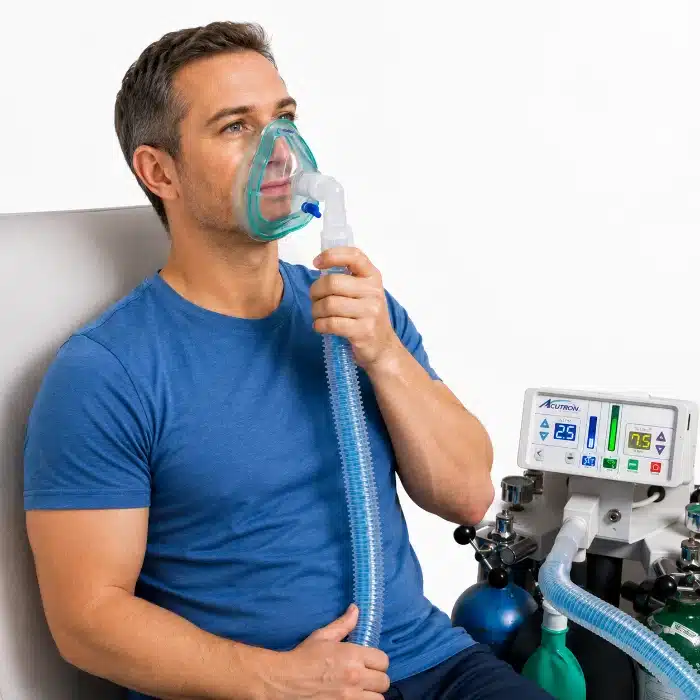
Nitrous oxide has been used safely in medical settings for many years as an anesthetic and analgesic (painkiller). It is administered through a breathing mask under strict medical supervision.
When inhaled, it calms overactive chemical signaling in the brain. In people with depression, this imbalance can keep the brain locked in patterns of negative thinking. By interrupting that cycle, nitrous oxide may help restore healthier brain function. Some patients notice a shift in mood within hours of a session.
Nitrous oxide therapy is beneficial for individuals with severe depression, especially those who have gone through multiple treatment options without meaningful improvement.
How It Works
When you inhale nitrous oxide, it travels through your lungs, enters your bloodstream, and reaches your brain within seconds.
In the brain, it works by blocking specific receptors (receiving points on brain cells that pick up chemical signals) called NMDA receptors. Think of these receptors as doors on your brain cells. Normally, a chemical called glutamate acts as a key, opening these doors to send signals. In a person with depression, there is too much glutamate activity through the NMDA receptors, causing the brain to get stuck in a loop of negative thinking.
When nitrous oxide blocks these specific receptors, it calms the brain circuits. The brain is no longer stuck. This may also trigger a natural repair chemical called BDNF in the brain that helps rebuild healthier connections between brain cells, as observed in a PubMed study on nitrous oxide.
What to Expect During a Session
Before the session:
You will have a consultation with Dr. James Leathem, DO. He will review your medical history and current medications, and confirm that the therapy is right for you. You may be asked to avoid eating a heavy meal a few hours before the session.
During the session:
You are made comfortable and seated on the clinical chair. A small mask is placed over your nose and mouth. The mask is gently secured in place, so your hands stay free and you don’t have to hold it. You breathe in a controlled ratio of 25% nitrous oxide and 75% oxygen via the mask. The session lasts for 60 minutes. You remain fully awake and conscious during the entire process. You may feel lightheadedness, tingling, or warmth.
Monitoring:
You are closely monitored throughout, ensuring your vitals remain normal. You can talk to our medical providers at any time during the session.
After the session:
The effects of the gas wear off quickly, usually within minutes of removing the mask. You will rest for a short while at our clinic before leaving. Most people can resume normal activities the same day. Some people experience mild nausea or headache, but these typically pass quickly.
What you may feel in the hours and days after:
Many patients report a noticeable lift in mood within hours of the session. Some feel the effects for several days. Others may need multiple sessions to experience sustained improvement.
Who Is This Treatment For?
Nitrous oxide therapy may be a good fit for people with:
- Treatment-resistant depression: Depression that does not respond to standard antidepressant treatments
- Major depressive disorder (MDD): A mood disorder causing persistent sadness and loss of interest in daily life
- Bipolar depression: The depressive phase experienced by people living with bipolar disorder
- Antidepressant intolerance: Sensitivity to antidepressant medications
If standard depression treatments have not worked for you, nitrous oxide therapy may be worth exploring. You do not have to keep trying treatments that have not helped. The first step is to be evaluated to determine whether you are a suitable candidate.
Clinical Research and Evidence
Research into nitrous oxide as a treatment for depression has been growing steadily, with clinical trials producing consistent and encouraging results across multiple countries.
A 2025 systematic review and meta-analysis published on PubMed analyzed seven clinical trials involving 247 participants. The research found that nitrous oxide produced significant reductions in depressive symptoms at both 2 hours and 24 hours after inhalation. (Source: pubmed.ncbi.nlm.nih.gov)
A phase 2 clinical trial also found that 25% nitrous oxide is just as effective as 50% nitrous oxide for treatment-resistant depression, making it a well-tolerated option for most patients.
(Source: https://www.science.org/doi/)
Nitrous oxide therapy has been studied across multiple conditions, including major depressive disorder, treatment-resistant depression, and bipolar depression, with consistent results pointing to its rapid-acting antidepressant potential.
Multiple studies have also compared nitrous oxide directly to ketamine, one of the most well-known fast-acting treatments for depression.
Research shows that 50% nitrous oxide produces comparable antidepressant effects to ketamine, but with a significantly simpler and safer administration process.
Nitrous oxide is not a controlled substance, requires no IV access, and patients can drive themselves home within 20 minutes of the session.
(Source:https://www.nature.com/articles/)
Schedule a Consultation For Nitrous Oxide Therapy
If you have been struggling with depression and feel like you have run out of options, nitrous oxide therapy may be the right care option worth exploring.
At Phoenix Scottsdale Ketamine Therapy Clinic, our team will review your medical history, discuss your current symptoms, and walk you through exactly what to expect from the treatment process.
Call us at (480) 253-9710 or use the booking tool below.
Frequently Asked Questions (FAQs)
How Does Nitrous Oxide Compare to Other Treatments?
As an option for patients who have failed to benefit from conventional therapies, nitrous oxide therapy presents a promising treatment choice. The therapy is non-invasive, fast-acting compared to antidepressants, and supported by growing clinical research.
How Long Do Results Last?
Everyone is different. A single session may provide improvement for several days to a week. However, more than one session is suggested to gain better results. A personalized treatment program will be developed depending on your needs.